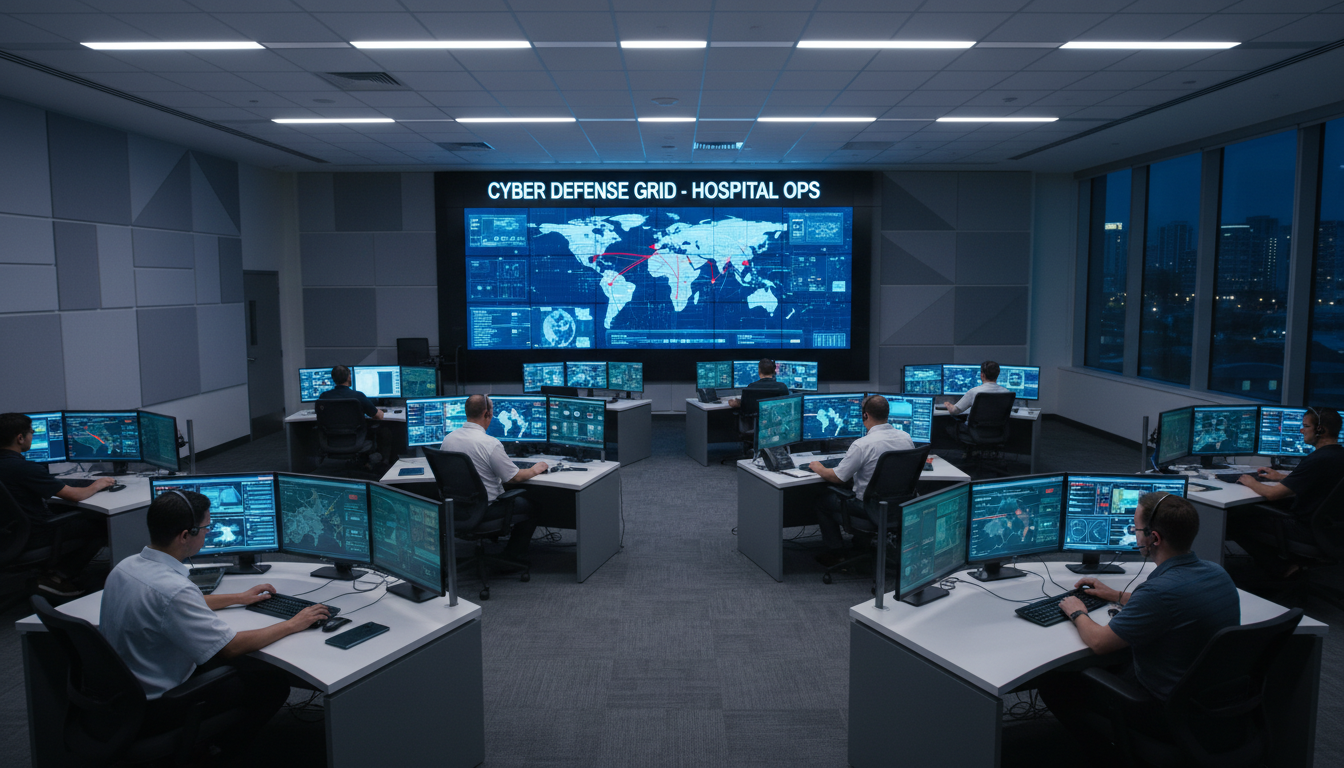
AI transforms medical device security by providing real-time threat detection and automated anomaly monitoring across complex clinical networks. Implementing an AI medical device security hospital strategy ensures that vulnerabilities are identified and mitigated before they can compromise patient safety or data privacy. These advanced systems provide a proactive defense layer that traditional security measures cannot match in modern healthcare settings.
As hospital environments become increasingly saturated with connected medical devices, security teams face an overwhelming visibility gap. The sheer volume of Internet of Medical Things assets often outpaces manual management; this leaves critical vulnerabilities unaddressed and patient safety at risk. It is no longer enough to rely on static signatures or legacy inventories. To maintain clinical continuity, modern healthcare facilities require intelligent systems that understand the unique behaviors of medical hardware. This post examines how artificial intelligence is transforming hospital cybersecurity by automating asset discovery and identifying threats through behavioral analysis. We will explore the shift from reactive patching to proactive protection through non-disruptive security gateways. By the end, you will understand how to leverage AI to secure your digital ecosystem while ensuring that life-saving equipment remains both accessible and protected.
The Growing Need for AI Medical Device Security in US Hospitals

Modern hospital environments have reached a tipping point where connectivity, once a tool for efficiency, has become a primary liability. A single patient room in a typical United States facility now contains between 15 and 20 connected devices. From infusion pumps and ventilators to sophisticated bedside monitors, these assets form a sprawling, intricate attack surface. In a city like Boston, where the concentration of world class research hospitals and high tech medical facilities in the Longwood Medical Area is unparalleled, the density of these devices is even higher. This creates a complex web of communication that traditional security frameworks were never designed to manage.
The sheer volume of telemetry data generated by these secure medical IoT devices makes manual oversight impossible for hospital IT departments. When a facility manages thousands of beds, the number of individual connections runs into the tens of thousands; each representing a potential entry point for lateral movement within the network. Consequently, AI medical device security hospital strategies have transitioned from an optional upgrade to an operational necessity. Human teams cannot parse the millions of daily network packets to identify the subtle anomalies that indicate a breach or a malfunction.
To maintain real time threat protection, hospitals must leverage an AI platform for medical security that operates at machine speed. Without automated intelligence, the visibility gap remains too wide, leaving critical patient care systems vulnerable to disruption. As the digital footprint of healthcare continues to expand, the reliance on advanced, specialized AI is the only viable path to securing the modern clinical environment.
Limitations of Traditional Cybersecurity for Connected Medical Equipment
Traditional cybersecurity frameworks were built for standard IT assets like laptops and servers, which utilize open operating systems and significant processing power. These devices can easily accommodate agent based software or withstand aggressive active scanning. However, the Internet of Medical Things (IoMT) operates under entirely different constraints. Many secure medical IoT devices run on specialized, legacy, or proprietary kernels that lack the resources for third party antivirus installations. More importantly, active network probes, which are standard in IT discovery, can inadvertently crash a medical device. Sending a high volume scan to a sensitive patient monitor might cause a system reboot or data lag at a critical clinical moment.
This incompatibility creates a dangerous blind spot for hospital administrators. Forcing traditional tools onto clinical hardware risks patient safety, yet leaving them unmonitored is equally untenable. Culinda addresses this by employing a dedicated security gateway that provides real time threat protection without direct interference. By utilizing a passive monitoring architecture, the system listens to network traffic rather than probing the device directly. This approach allows an AI platform for medical security to analyze communication patterns without risk to clinical uptime, ensuring that AI medical device security hospital protocols enhance safety rather than compromising it.
Automated Device Categorization: How AI Identifies Your Assets
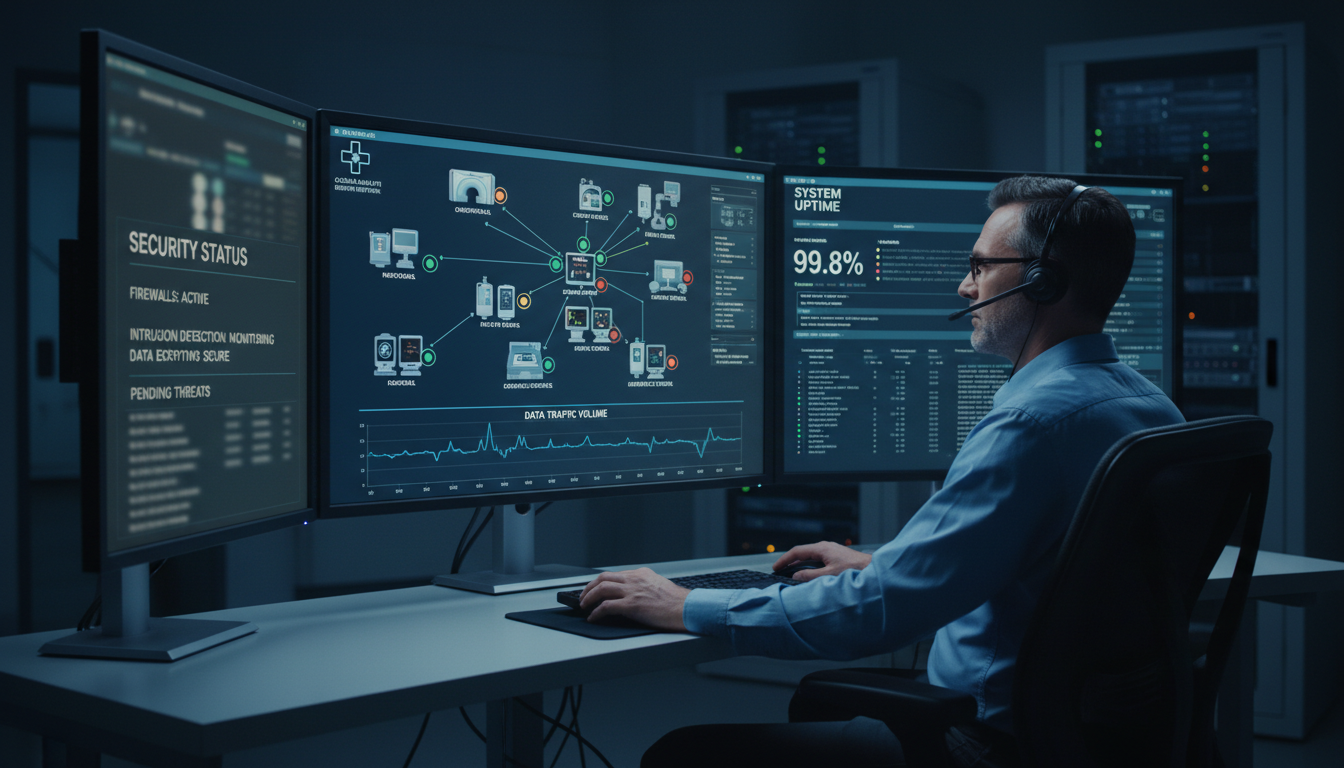
The foundational challenge in securing clinical environments is the visibility gap. In a dynamic facility, manual inventory methods like spreadsheets or legacy databases are functionally obsolete the moment they are saved. Effective AI medical device security hospital strategies rely on the fundamental principle that you cannot protect what you cannot see. Culinda’s AI platform for medical security solves this by providing automated, real time identification of every connected asset without requiring manual entry or disruptive probes.
Instead of relying on static MAC addresses which can be spoofed or provide limited data, the platform analyzes the unique communication patterns of each asset. Every piece of equipment has a distinct digital fingerprint. The AI examines network protocols, packet headers, and traffic frequency to instantly distinguish between a Siemens MRI machine and a Baxter infusion pump. It identifies the manufacturer, model, and software version by observing how the device interacts with the network. This granular identification is crucial because a ventilator requires vastly different security parameters than a smart thermometer.
This continuous discovery process ensures that secure medical IoT devices are accounted for as soon as they are plugged into a VLAN. By maintaining an always accurate inventory, hospital IT departments can move away from reactive manual tracking and toward a structured risk management posture. This automated categorization provides the specific data points necessary to apply precise security policies, ensuring that clinical assets are identified with the accuracy required for high stakes medical environments.
Behavioral Analysis: Detecting Threats That Signatures Miss
Once a device is accurately categorized, the focus shifts from simple identification to continuous monitoring. To achieve real time threat protection, hospital security must move beyond signature based detection. Traditional antivirus tools rely on a library of known threats, which is ineffective against zero day exploits or custom malware targeting IoMT. Instead, an AI platform for medical security establishes a behavioral baseline for every asset. This baseline acts as a digital heartbeat; it defines exactly how a device should communicate, which protocols it uses, and which internal servers it is authorized to access.
In a high stakes environment, AI medical device security hospital protocols detect threats by identifying deviations from this norm. For example, if an infusion pump that typically only transmits small status packets to a central nurse station suddenly attempts to access a financial database or begins sending data to an external IP address in another country, the system triggers an immediate alert. The AI does not need to recognize the specific malware to stop the attack. It identifies that the pump’s behavior is no longer consistent with its clinical function, allowing IT teams to isolate the device before the breach can spread.
This methodology is particularly effective against sophisticated threats that bypass standard firewalls. By analyzing the intent and pattern of network traffic, AI provides a layer of defense that remains effective even as attackers develop new techniques. It ensures that secure medical IoT devices remain dedicated to their medical purpose, providing a proactive safeguard that traditional, reactive security measures simply cannot match.
Ensuring Clinical Continuity with Non Disruptive AI Security Gateways

The ultimate measure of any AI medical device security hospital implementation is its impact on patient care. Security protocols that introduce latency, require cumbersome login procedures for clinical staff, or necessitate reconfiguring secure medical IoT devices are fundamentally incompatible with high acuity environments. Culinda addresses this by deploying a dedicated hardware gateway that functions as a silent sentry. This gateway integrates into the existing network infrastructure without requiring agent installation or software modifications on the medical equipment itself.
This hardware based approach ensures that the AI platform for medical security can inspect traffic and enforce policies at the network edge without touching the clinical application layer. For practitioners in Boston’s busiest trauma centers, the system is entirely transparent. Nurses and physicians continue their workflows, operating infusion pumps and bedside monitors exactly as before, while the AI manages the digital perimeter in the background. By providing real time threat protection at the gateway level, the solution eliminates the risk of security scans interfering with life critical data streams. Clinical continuity remains the priority; the security layer exists to preserve it, not disrupt it, allowing the medical team to remain focused on the patient rather than the network.
Enhancing Patient Safety and Data Integrity in the Digital Era
The ultimate objective of securing the clinical network is the preservation of patient life. While a data breach involving administrative records is a significant financial and legal disaster, the manipulation of a medical device is a direct clinical threat. When secure medical IoT devices are compromised, the risk shifts from privacy loss to physical harm. For example, an unauthorized actor could potentially alter the delivery rate of a smart infusion pump or disable critical alarms on a bedside monitor without the clinician’s knowledge. Robust AI medical device security hospital protocols prevent these scenarios by ensuring that every command sent to a device is legitimate and every data point received is accurate.
Beyond device operation, the integrity of the information flowing into Electronic Health Records (EHR) is vital for diagnostic accuracy. If the AI platform for medical security detects that telemetry data has been intercepted or modified, it provides real time threat protection by flagging the discrepancy before the false data can influence clinical decisions. This level of oversight is increasingly becoming a regulatory requirement. Both the FDA and the OCR have tightened their scrutiny on hospital systems, demanding more stringent IoMT protections to mitigate the risks associated with connected hardware. Utilizing specialized AI allows healthcare facilities to meet these compliance standards while fundamentally enhancing the reliability of their patient care data.
The Future of Hospital Cybersecurity: Moving from Reactive to Proactive

The future of AI medical device security hospital protocols lies in predictive modeling rather than incident response. Currently, many IT teams are trapped in a cycle of reactive patching and manual intervention. Transitioning to an AI platform for medical security shifts this burden, allowing systems to anticipate vulnerabilities before they are exploited. As secure medical IoT devices advance in complexity, they generate more granular data points. This increased data density provides a richer training set for the engine, enabling the system to refine its behavioral baselines and improve real time threat protection accuracy over time.
Culinda bridges the gap between technical defense and clinical reality. By merging deep expertise in hospital operations with advanced machine learning, the platform allows medical institutions to maintain a defensive posture that evolves alongside the threat landscape. This partnership ensures that as the digital ecosystem of the hospital matures, the security infrastructure remains a proactive facilitator of care; it allows clinicians to adopt new technologies without the looming shadow of network instability.